 tessera
New boards Wishlist
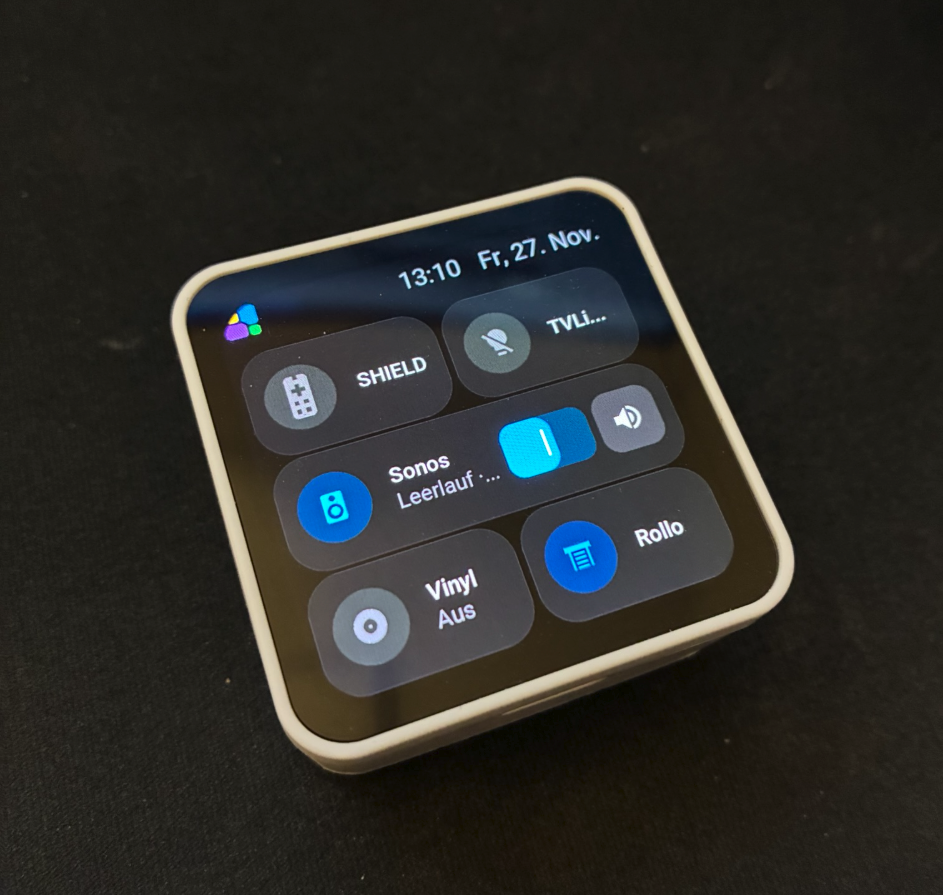
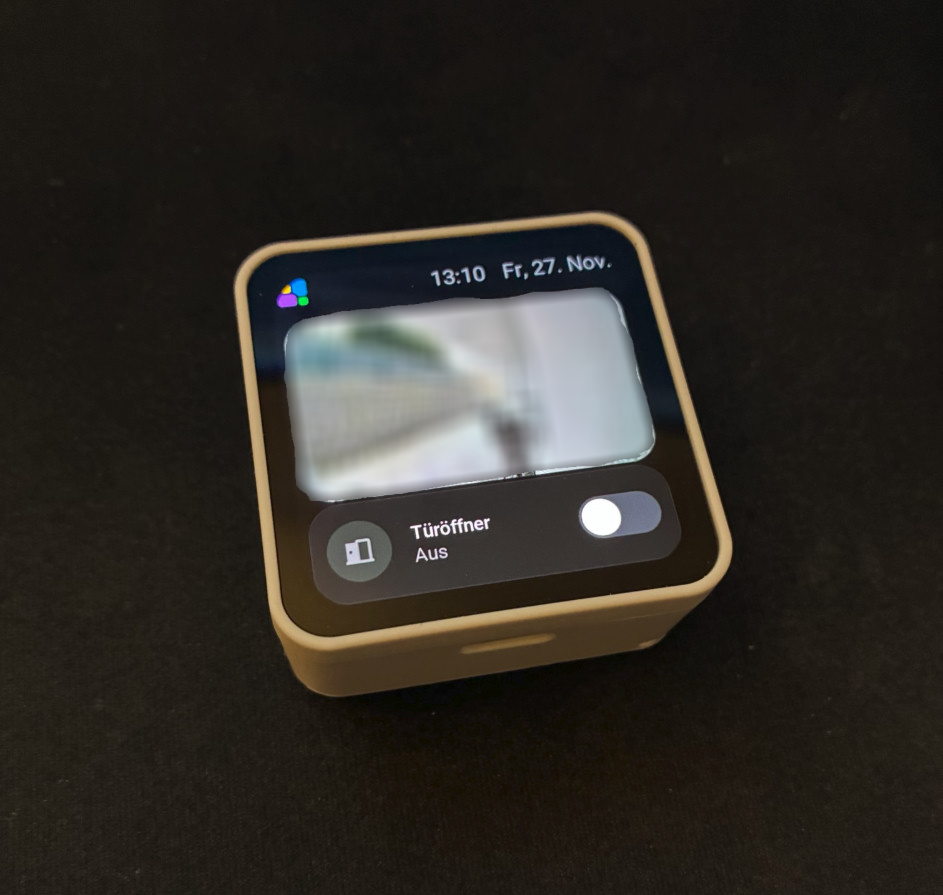
Hardware testing
We often do not have this board ourselves. Community testing helps establish what actually works. A successful report is evidence for the maintainer to review, not an automatic compatibility claim.
Board details & configuration
- Model
- Waveshare ESP32-S3-Touch-AMOLED-2.16
- Chip, RAM and flash
- ESP32-S3R8 Wi-Fi and Bluetooth SoC, up to 240MHz operating frequency, with onboard 8MB PSRAM
- Display and touch
- 2.16inch AMOLED CO5300 driver, Touch CST9220
- Already tried
- It's been working great for me for a few weeks now. The display, touchscreen, audio, and hardware buttons all work. I haven't noticed any problems so far. I'm currently running firmware version 0.66.0.
- Configuration status
- working
View shared configuration
mobilescreen.yaml

# Keep this file safe: it contains the unique keys for this screen.
# Wi-Fi comes from the secrets.yaml of ESPHome Device Builder.
substitutions:
  CHIP_REVISION: "2"
  DEVICE_NAME: "mobilescreen"
  DEVICE_FRIENDLY_NAME: "MobileScreen"
  LANGUAGE: "de"
  SWIPE_PAGES_DEFAULT: "1"
  GITHUB_REF: "screens-v0.4.106"
  FONT_DIR: "https://raw.githubusercontent.com/MaxGramser/homeassistant_espscreen/${GITHUB_REF}/fonts"

  # Kompatibilitaetskennung fuer den Tessera-Editor (480 x 480, PSRAM).
  # Hier wird KEINE Guition-Hardware eingebunden; alle Pins stehen unten.
  BOARD_ID: "guition"
  PANEL_W: "480"
  PANEL_H: "480"
  DISPLAY_DPI: "314.27"
  GRID_COLS: "2"
  GRID_ROWS: "3"
  GRID_COLS_PORTRAIT: "2"
  GRID_ROWS_PORTRAIT: "3"
  SCREEN_MAX_TILES: "128"
  SCREEN_MAX_PAGES: "24"
  SCREEN_MAX_BAR_ITEMS: "6"
  LVGL_BUFFER_SIZE: "25%"
  ROTATION_LANDSCAPE: "0"
  LVGL_ROTATION: "0"

  # Ausgangswerte fuer die native Displayausrichtung; am Geraet pruefen.
  TOUCH_SWAP_XY: "false"
  TOUCH_MIRROR_X: "false"
  TOUCH_MIRROR_Y: "false"
  BACKLIGHT_DIMMABLE: "true"
  CAN_STANDBY: "true"
  MAX_BRIGHTNESS: "70"
  AUTO_DIM_TIMEOUT: "120"
  DIM_BRIGHTNESS: "0"
  NIGHT_MODE: "false"

esphome:
  name: "mobilescreen"
  friendly_name: "MobileScreen"
  on_boot:
    priority: -100
    then:
      - delay: 1s
      - lambda: |-
          settings_screen::set("brightness", 50);
          settings_screen::set("dark_mode", 1);

          settings_screen::set("standby_enabled", 1);
          settings_screen::set("standby_seconds", 120);
          settings_screen::set("standby_brightness", 0);
          settings_screen::set("night_enabled", 0);

          settings_screen::set("auto_home", 1);
          settings_screen::set("auto_home_seconds", 60);
          settings_screen::set("home_on_standby", 0);

          settings_screen::set("swipe_pages", 1);
          settings_screen::set("page_buttons", 0);
          settings_screen::set("home_button", 1);
          settings_screen::set("rotation", 270);

esp32:
  board: esp32-s3-devkitc-1
  variant: esp32s3
  flash_size: 16MB
  cpu_frequency: 240MHz
  framework:
    type: esp-idf
    advanced:
      loop_task_stack_size: 16384

psram:
  mode: octal
  speed: 80MHz

# Nur gemeinsame Tessera-Bausteine. Kein waveshare5-/RGB-Boardpaket!
packages:
  extras: !include mobilescreen-extras.yaml
  tessera:
    url: https://github.com/MaxGramser/homeassistant_espscreen
    ref: screens-v0.4.106
    refresh: 0s
    files:
      - packages/core.yaml
      - packages/looks/compact.yaml
      - packages/features/capacitive-touch.yaml
      - packages/features/backlight.yaml
      - packages/features/camera.yaml
      - packages/features/self-test.yaml
      - packages/features/snapshot.yaml

external_components:
  - source:
      type: git
      url: https://github.com/MaxGramser/homeassistant_espscreen.git
      ref: ${GITHUB_REF}
      path: components
    components: [smart_display]
    refresh: 0s

logger:
  hardware_uart: USB_SERIAL_JTAG
  level: DEBUG

i2c:
  id: touch_bus
  sda: GPIO15
  scl: GPIO14
  frequency: 400kHz
  scan: true

spi:
  id: display_qspi
  type: quad
  clk_pin: GPIO38
  data_pins: [GPIO4, GPIO5, GPIO6, GPIO7]

display:
  - platform: mipi_spi
    id: my_display
    model: WAVESHARE-ESP32-S3-TOUCH-AMOLED-2.16
    spi_id: display_qspi
    bus_mode: quad
    cs_pin: GPIO12
    reset_pin: GPIO39
    dimensions:
      width: 480
      height: 480
      offset_width: 0
      offset_height: 0
    data_rate: 40MHz
    color_order: RGB
    brightness: 128
    update_interval: never
    auto_clear_enabled: false

touchscreen:
  - platform: cst9220
    id: ts_touch
    i2c_id: touch_bus
    display: my_display
    address: 0x5A
    interrupt_pin: GPIO11
    reset_pin: GPIO40
    update_interval: 20ms
    transform:
      swap_xy: ${TOUCH_SWAP_XY}
      mirror_x: ${TOUCH_MIRROR_X}
      mirror_y: ${TOUCH_MIRROR_Y}
    on_touch:
      - binary_sensor.template.publish:
          id: display_touch
          state: ON
    on_release:
      - binary_sensor.template.publish:
          id: display_touch
          state: OFF

# Tessera erwartet diesen Output. Der steuert hier die AMOLED-Helligkeit
# ueber den Displaytreiber, keinen GPIO und keine Hintergrundbeleuchtung.
output:
  - platform: template
    id: gpio_backlight_pwm
    type: float
    write_action:
      - lambda: |-
          id(my_display).set_brightness(static_cast<uint8_t>(state * 255.0f));

light:
  - id: !extend back_light
    gamma_correct: 1.0

binary_sensor:
  - platform: template
    id: display_touch
    name: "Display Beruehrung"
    icon: mdi:gesture-tap

api:
  encryption:
    key: "xxxxxxxxxxxxxxxxxxxxxxxxxxxxxxxxxxxxxx"

ota:
  - platform: esphome
    encryption:

wifi:
  ssid: !secret wifi_ssid
  password: !secret wifi_password
  power_save_mode: none
  ap:
    ssid: "Tessera MobileScreen"
    password: "xxxxxxxxxxxx"
captive_portal:


mobilescreen-extra.yaml

# Zusatzhardware fuer ESP32-S3-Touch-AMOLED-2.16 / ESPHome 2026.10.2.
# Als lokales Paket in die funktionierende mobilescreen.yaml einbinden.
external_components:
  - source:
      type: local
      path: components
    components: [mobilescreen_power]

mobilescreen_power:
  id: amoled_power
  i2c_id: touch_bus
  address: 0x34
  update_interval: 10s
  enable_audio_power: true
  battery_level:
    id: amoled_battery_level
    name: "Akku"
  battery_voltage:
    id: amoled_battery_voltage
    name: "Akkuspannung"
    entity_category: diagnostic
  battery_present:
    id: amoled_battery_present
    name: "Akku angeschlossen"
    entity_category: diagnostic
  charging:
    id: amoled_battery_charging
    name: "Akku wird geladen"
  usb_connected:
    id: amoled_usb_connected
    name: "USB Versorgung"
  power_button:
    id: mobilescreen_power_button
    name: "Taste Power"
    icon: mdi:power
  power_button_event:
    id: mobilescreen_power_button_event
    name: "Taste Power Tastendruck"

motion:
  - platform: qmi8658
    id: amoled_imu
    i2c_id: touch_bus
    address: 0x6B
    accelerometer_range: 4G
    gyroscope_range: 512DPS
    accelerometer_odr: 125HZ
    gyroscope_odr: 125HZ
    update_interval: 50ms

sensor:
  - platform: motion
    motion_id: amoled_imu
    type: acceleration_x
    name: "IMU Beschleunigung X"
    entity_category: diagnostic
    filters: [{throttle: 1s}]
  - platform: motion
    motion_id: amoled_imu
    type: acceleration_y
    name: "IMU Beschleunigung Y"
    entity_category: diagnostic
    filters: [{throttle: 1s}]
  - platform: motion
    motion_id: amoled_imu
    type: acceleration_z
    name: "IMU Beschleunigung Z"
    entity_category: diagnostic
    filters: [{throttle: 1s}]
  - platform: motion
    motion_id: amoled_imu
    type: gyroscope_x
    name: "IMU Drehrate X"
    entity_category: diagnostic
    filters: [{throttle: 1s}]
  - platform: motion
    motion_id: amoled_imu
    type: gyroscope_y
    name: "IMU Drehrate Y"
    entity_category: diagnostic
    filters: [{throttle: 1s}]
  - platform: motion
    motion_id: amoled_imu
    type: gyroscope_z
    name: "IMU Drehrate Z"
    entity_category: diagnostic
    filters: [{throttle: 1s}]
  - platform: motion
    motion_id: amoled_imu
    type: pitch
    name: "IMU Neigung"
    filters: [{throttle: 1s}]
  - platform: motion
    motion_id: amoled_imu
    type: roll
    name: "IMU Rollwinkel"
    filters: [{throttle: 1s}]

  # Beide Mikrofonkanaele separat pruefbar. Relative dBFS, kein kalibriertes dB(A).
  # Passive Auswertung: Der Schalter 'Mikrofontest' startet die Aufnahme.
  - platform: sound_level
    id: amoled_mic_level_1
    microphone:
      microphone: amoled_microphone
      channels: [0]
    passive: true
    measurement_duration: 1s
    rms:
      name: "Mikrofon 1 Pegel"
      entity_category: diagnostic
    peak:
      name: "Mikrofon 1 Spitze"
      entity_category: diagnostic
  - platform: sound_level
    id: amoled_mic_level_2
    microphone:
      microphone: amoled_microphone
      channels: [1]
    passive: true
    measurement_duration: 1s
    rms:
      name: "Mikrofon 2 Pegel"
      entity_category: diagnostic
    peak:
      name: "Mikrofon 2 Spitze"
      entity_category: diagnostic

binary_sensor:
  - platform: gpio
    id: mobilescreen_boot_button
    name: "Taste BOOT"
    icon: mdi:gesture-tap-button
    pin:
      number: GPIO0
      ignore_strapping_warning: true
      mode:
        input: true
        pullup: true
      inverted: true
    filters:
      - delayed_on_off: 20ms
  - platform: gpio
    id: mobilescreen_user_button
    name: "Taste GPIO18"
    icon: mdi:gesture-tap-button
    pin:
      number: GPIO18
      mode:
        input: true
        pullup: true
      inverted: true
    filters:
      - delayed_on_off: 20ms

# Ein gemeinsamer Bus: Mikrofon und Lautsprecher nutzen dieselben Taktleitungen.
i2s_audio:
  - id: amoled_audio_bus
    i2s_mclk_pin: GPIO42
    i2s_bclk_pin: GPIO9
    i2s_lrclk_pin:
      number: GPIO45
      ignore_strapping_warning: true

audio_adc:
  - platform: es7210
    id: amoled_audio_adc
    i2c_id: touch_bus
    address: 0x40
    sample_rate: 16000
    bits_per_sample: 16bit
    mic_gain: 24dB

audio_dac:
  - platform: es8311
    id: amoled_audio_dac
    i2c_id: touch_bus
    address: 0x18
    sample_rate: 16000
    bits_per_sample: 16bit
    use_mclk: true
    use_microphone: false

microphone:
  - platform: i2s_audio
    id: amoled_microphone
    i2s_audio_id: amoled_audio_bus
    i2s_din_pin: GPIO10
    adc_type: external
    pdm: false
    sample_rate: 16000
    bits_per_sample: 16bit
    channel: stereo

speaker:
  - platform: i2s_audio
    id: amoled_speaker
    i2s_audio_id: amoled_audio_bus
    i2s_dout_pin: GPIO8
    dac_type: external
    audio_dac: amoled_audio_dac
    sample_rate: 16000
    bits_per_sample: 16bit
    channel: mono
    buffer_duration: 100ms
    timeout: 500ms
  - platform: mixer
    id: amoled_audio_mixer
    output_speaker: amoled_speaker
    source_speakers:
      - id: amoled_announcement_input
      - id: amoled_media_input

media_player:
  - platform: speaker
    id: amoled_media_player
    name: "Lautsprecher"
    volume_initial: 70%
    buffer_size: 65536
    announcement_pipeline:
      speaker: amoled_announcement_input
      format: FLAC
      sample_rate: 16000
      num_channels: 1
    media_pipeline:
      speaker: amoled_media_input
      format: FLAC
      sample_rate: 16000
      num_channels: 1
    files:
      - id: amoled_test_tone
        file: assets/testton.wav

switch:
  - platform: gpio
    id: amoled_amplifier
    name: "Lautsprecher Verstaerker"
    entity_category: config
    pin:
      number: GPIO46
      ignore_strapping_warning: true
    restore_mode: ALWAYS_ON
  - platform: template
    id: amoled_microphone_test
    name: "Mikrofontest"
    entity_category: diagnostic
    optimistic: true
    restore_mode: ALWAYS_OFF
    turn_on_action:
      - microphone.capture: amoled_microphone
    turn_off_action:
      - microphone.stop_capture: amoled_microphone

# Der Lautsprecher hat Vorrang. Nach der Wiedergabe darf ein aktiver
# Mikrofontest weiterlaufen; ausgeschaltet bleibt er aus.
interval:
  - interval: 50ms
    then:
      - lambda: |-
          const bool speaking = !id(amoled_speaker).is_stopped();
          if (speaking && id(amoled_microphone).is_running()) {
            id(amoled_microphone).stop();
          } else if (!speaking && id(amoled_microphone_test).state &&
                     !id(amoled_microphone).is_running()) {
            id(amoled_microphone).start();
          }

button:
  - platform: template
    name: "Lautsprecher Testton"
    entity_category: diagnostic
    on_press:
      - switch.turn_on: amoled_amplifier
      - media_player.speaker.play_on_device_media_file:
          id: amoled_media_player
          media_file: amoled_test_tone
          announcement: true

  - platform: template
    id: mobilescreen_shutdown
    name: "Geraet ausschalten"
    icon: mdi:power
    entity_category: config
    on_press:
      # Give the API time to report the button press before the power is cut.
      - delay: 200ms
      - lambda: |-
          uint8_t chip_id;
          if (!id(amoled_power).read_byte(0x03, &chip_id) || chip_id != 0x4A) {
            ESP_LOGE("mobilescreen.shutdown", "AXP2101 nicht erreichbar; Ausschalten abgebrochen");
            return;
          }
          uint8_t common_config;
          if (!id(amoled_power).read_byte(0x10, &common_config)) {
            ESP_LOGE("mobilescreen.shutdown", "Powerregister nicht lesbar; Ausschalten abgebrochen");
            return;
          }
          if (esphome::global_preferences != nullptr &&
              !esphome::global_preferences->sync()) {
            ESP_LOGW("mobilescreen.shutdown", "Speichern der Einstellungen fehlgeschlagen");
          }
          ESP_LOGI("mobilescreen.shutdown", "AXP2101 schaltet das Geraet aus");
          // AXP2101 COMMON_CONFIG 0x10, bit 0 = software power-off.
          // Read-modify-write preserves the other control bits.
          if (!id(amoled_power).write_byte(0x10, common_config | 0x01)) {
            ESP_LOGE("mobilescreen.shutdown", "Ausschaltbefehl konnte nicht gesendet werden");
          }

esphome:
  includes:
    - <esphome/core/preferences.h>
1 owner has volunteered to test.
Sign in to volunteer
Discussion 0
Add a commentStart the conversation
Share an example, ask a question or explain how you would use this.